
Course : Εισαγωγή στη Ραδιοστρονομία
Course code : PH338C
Φ-338Γ - Διαχειριστής Πλατφόρμας
Course Description
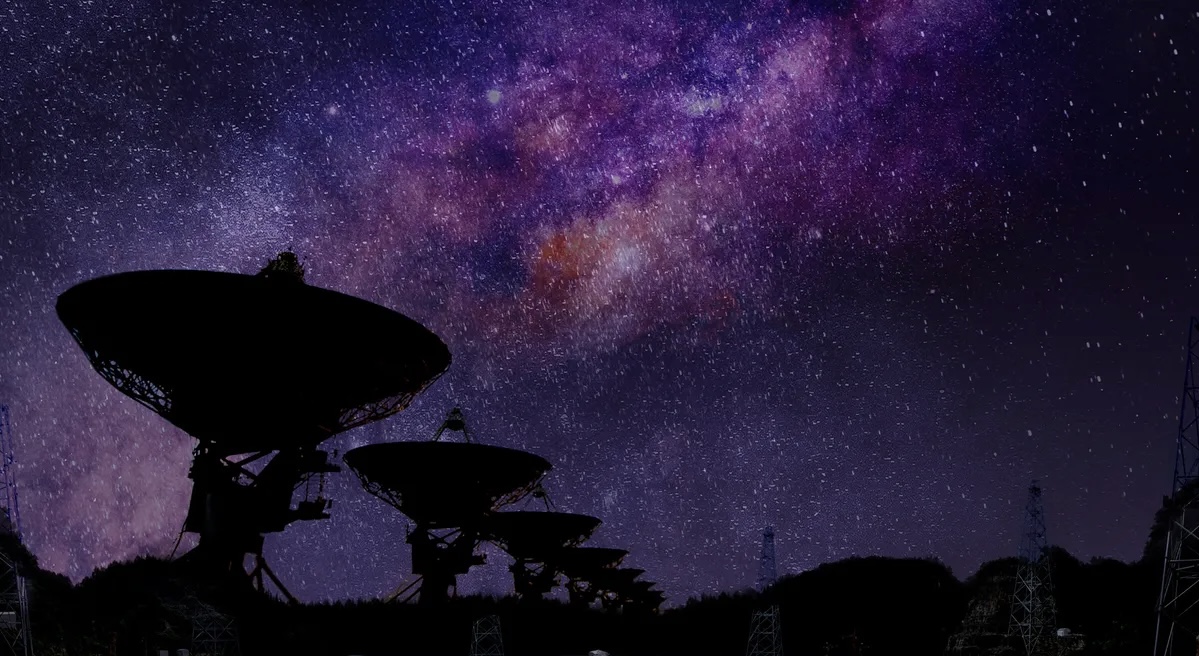
This course is intended to be a guided tour through the strange and occasionally messy world of radio astronomy. We will start from the basic physics of radio emission and propagation, then move step by step through the instruments and techniques that allow us to turn faint radio signals into actual science. We will cover how radio telescopes work, why a single dish behaves very differently from an interferometer, how spectral lines reveal the motion and composition of gas, and why pulsars are among the best clocks in the Universe. We will also explore the practical side of radio observing, including receivers, noise, calibration, imaging, data analysis, and the eternal struggle against radio-frequency interference — because the Universe is faint, but mobile phones are not.
The course will cover both classical and modern radio astronomy: single-dish observations, spectral-line astronomy, pulsars and pulsar timing, interferometry, high-frequency radio/sub-mm astronomy, VLBI. We will also cover fascinating modern topics such as the Event Horizon Telescope, transient searches, and SETI.
Along the way, we will encounter some of the field’s biggest scientific questions: how galaxies form stars, how black holes launch jets, how neutron stars behave, how we can image the shadow of a black hole, and whether anyone out there is broadcasting on purpose.The aim is to give a solid foundation without burying under unnecessary technical detail. By the end of the course, we should be able to read modern radio-astronomy papers, understand what the telescopes actually measure, and no longer feel that the telescope, the data, or the calibration pipeline are some kind of dark art practiced by a secret society of antenna wizards.
-
Instructors
Dr. John Antoniadis - Senior Researcher - FORTH Institute of Astrophysics
Dr. Carolina Cassadio - Associate Researcher - FORTH Institute of Astrophysics
Dr. Tanio Diaz Santos - Senior Researcher - FORTH Institute of AstrophysicsSyllabus
Week 1— Introduction: What is radio astronomy
Week 2 — Radiation mechanisms in the radio
Week 3 — Course: Propagation through plasmas and the interstellar medium
Week 4 — Antennas, beams, and single-dish observing
Week 5 — Receivers, backends, digitization, and RFI Lab: Fourier transforms, sampling etc.
Week 6 — Spectral-line radio astronomy
Week 7 — Polarization and magnetic fields
Week 8 — Pulsars and pulsar timing
Week 9 — Transients, FRBs, surveys, and time-domain radio astronomy
Week 10 — Interferometry I: the fundamental idea
Week 11 — Interferometry II: calibration and imaging
Week 12 — VLBI, astrometry, geodesy, and extreme angular resolution
Week 13 — High-frequency radio astronomy: ALMA, sub-mm astronomy, and the EHT
Week 14 — SETI, technosignatures, future facilities
Learning Outcomes
By the end of the semester, students should be able to:
- Explain the basic physics of radio emission and propagation.
- Understand how single-dish telescopes and interferometers work.
- Estimate sensitivity, angular resolution, beam size, brightness temperature, and survey speed
- Interpret continuum, spectral-line, polarization, pulsar, and VLBI data
- Understand the basic principles of SETI and technosignature searches
- Understand major modern facilities and experiments, including ALMA, ARGOS, EHT, LOFAR, MeerKAT, FAST, VLA/ngVLA, SKA pathfinders, and pulsar timing arrays.
- Design and write a simple radio observing proposal
- Perform basic radio data analysis using Python and modern analysis software (e.g. CASA, TEMPO2 etc.)
Bibliography
- Suggested bibliography:
Main:
- Essential Radio Astronomy, Condon & Ransom, Princeton University Press
https://science.nrao.edu/opportunities/courses/era
Other references:
- An introduction to Radio Astronomy, Burke Graham-Smith & Wilkinson
- Tools of Radio Astronomy, Wilson, Rohlfs & Hüttemeister, 2009, Springer
- Interferometry & Synthesis in Radio Astronomy, Thompson, Moran & Swenson
- Handbook of Pulsar Astronomy, Lorlmer & Kramer
Assessment Methods
Activity
Weight
Problem Sets
25%
Lab notebooks
35%
Observing proposal
35%
Participation
5%
Lecture topics
Radio astronomy in the electromagnetic spectrum. Wavelength, frequency, photon energy, flux density, Jansky, luminosity, brightness, intensity, brightness temperature. Why radio is different: coherent detection, phase information, large beams, foregrounds, RFI, long wavelengths, and diffraction-limited resolution.
Introduce the major science themes: cold gas, synchrotron emission, star formation, pulsars, masers, AGN jets, CMB, FRBs, molecular gas, black holes, technosignatures.
Key concepts
Flux density, specific intensity, brightness temperature, Rayleigh–Jeans approximation, solid angle, beam size.
Lecture topics
Thermal blackbody emission in the Rayleigh–Jeans regime. Free-free emission. Synchrotron radiation. Cyclotron and gyrosynchrotron emission. Coherent emission. Spectral index. Optical depth. Self-absorption. Why radio spectra carry physical information.
Key concepts
Thermal vs non-thermal emission, spectral index, synchrotron ageing, self-absorbed spectra, emission measure.
Lecture topics
Dispersion, Faraday rotation, scattering, scintillation, absorption. The ionosphere. The interstellar medium as both nuisance and diagnostic. Dispersion measure, rotation measure, scattering time, scintillation bandwidth. Relevance to pulsars, FRBs, low-frequency arrays, and precision timing.
Key concepts
dispersion measure (DM), rotation measure (RM), plasma frequency, group delay, scattering tails, scintillation, depolarization.
Lecture topics
Antenna effective area, aperture efficiency, gain, beam patterns, sidelobes, spillover, system temperature, receiver temperature, sky temperature. The radiometer equation. Position switching, frequency switching, beam switching, drift scans. Calibration basics.
Key concepts
Antenna temperature, system equivalent flux density, gain curves, beam efficiency, noise, integration time.
Lecture topics
Heterodyne receivers, mixers, local oscillators, bandwidth, sampling, quantization, polyphase filterbanks, spectrometers, pulsar backends, baseband recording. RFI detection and mitigation. Practical observing system architecture.
Key concepts
Nyquist sampling, bandwidth, channelization, dynamic range, ADC bits, data rates, RFI excision.
Lecture topics
The 21-cm hydrogen line, molecular rotational transitions, recombination lines, masers. Doppler shifts, velocity conventions, line profiles, optical depth, column density. Galactic rotation, HI surveys, molecular clouds, star formation, extragalactic gas.
Key concepts
Rest frequency, radial velocity, line width, column density, spin temperature, molecular tracers, critical density.
Lecture topics
Stokes parameters, feeds and polarization response, linear/circular polarization, Faraday rotation, RM synthesis, instrumental leakage, calibration challenges. Synchrotron polarization, magnetic fields in galaxies, pulsar polarization, jets, masers.
Key concepts
I, Q, U, V; polarization angle; fractional polarization; leakage; Faraday depth.
Lecture topics
Neutron-star basics. Pulsar emission phenomenology. Periodicity searches, folding, dedispersion, acceleration searches, single-pulse searches. Timing models: spin, astrometry, binary motion, dispersion variations, clock corrections, barycentering. Timing residuals. Applications: neutron-star masses, tests of gravity, ISM studies, pulsar timing arrays and nanohertz gravitational waves.
Key concepts
Pulse profile, TOA, ephemeris, timing residual, DM variations, binary parameters, PTA.
Lecture topics
Fast radio bursts, rotating radio transients, radio supernovae, flare stars, magnetars, tidal disruption events, GRB afterglows. Survey design: field of view, cadence, sensitivity, localization, false positives. Real-time detection pipelines. Multi-messenger connections.
Key concepts
Fluence, dispersion sweep, localization, cadence, completeness, selection effects, event rates.
Lecture topics
Why interferometry is necessary. Two-element interferometer. Visibility as a Fourier component of the sky brightness. Baselines, uv-plane, fringe spacing, coherence, delay tracking. Earth-rotation synthesis. The van Cittert–Zernike theorem in practical terms.
Key concepts
Visibility, uv-coverage, baseline, synthesized beam, dirty image, primary beam.
Lecture topics
Complex gains, bandpass calibration, phase calibration, flux calibration, self-calibration. Dirty beam, CLEAN, weighting schemes, deconvolution, mosaicking, missing short spacings. Dynamic range limitations.
Key concepts
Gain solutions, calibrators, phase stability, CLEAN components, natural/uniform/Briggs weighting, deconvolution artifacts.
Lecture topics
Very Long Baseline Interferometry in detail. Independent clocks, hydrogen masers, baseband recording, correlation, delay models, phase referencing, fringe fitting. Astrometry, parallax, proper motion, AGN jets, masers, spacecraft tracking, geodesy. Relationship between connected-element interferometry and VLBI. Why VLBI is brutal but powerful.
Key concepts
Fringes, fringe rate, group delay, phase referencing, closure phase, maser clocks, correlation, astrometric precision.
Lecture topics
Millimeter/submillimeter observing. Atmospheric opacity, water vapor, phase stability, high-site observing. Molecular gas, dust continuum, protoplanetary disks, high-redshift galaxies, star formation, astrochemistry.
The Event Horizon Telescope: mm-VLBI, black-hole shadow imaging, closure phase, sparse imaging, scattering, calibration at extreme resolution.
Key concepts
Atmospheric transmission, phase noise, precipitable water vapor, dust emission, molecular ladders, mm-VLBI, closure quantities.
Lecture topics
Radio SETI history and modern technosignature searches. Narrowband signals, broadband leakage, Doppler drift, false positives, RFI, verification protocols, commensal searches. SETI as signal processing and extreme anomaly detection. Comparison between SETI and pulsar/FRB pipelines.
Future directions: SKA, ngVLA, ARGOS-style arrays, low-frequency cosmology, lunar farside concepts, intensity mapping, AI-assisted searches, commensal observing.
Key concepts
Technosignature, narrowband search, Doppler drift, RFI rejection, on/off source tests, commensal observing.
Agenda
Announcements
ALL ANNOUNCEMENTS...- - There are no announcements -