
Παρουσίαση/Προβολή
(Φ-338Γ) - Διαχειριστής Πλατφόρμας
Περιγραφή Μαθήματος
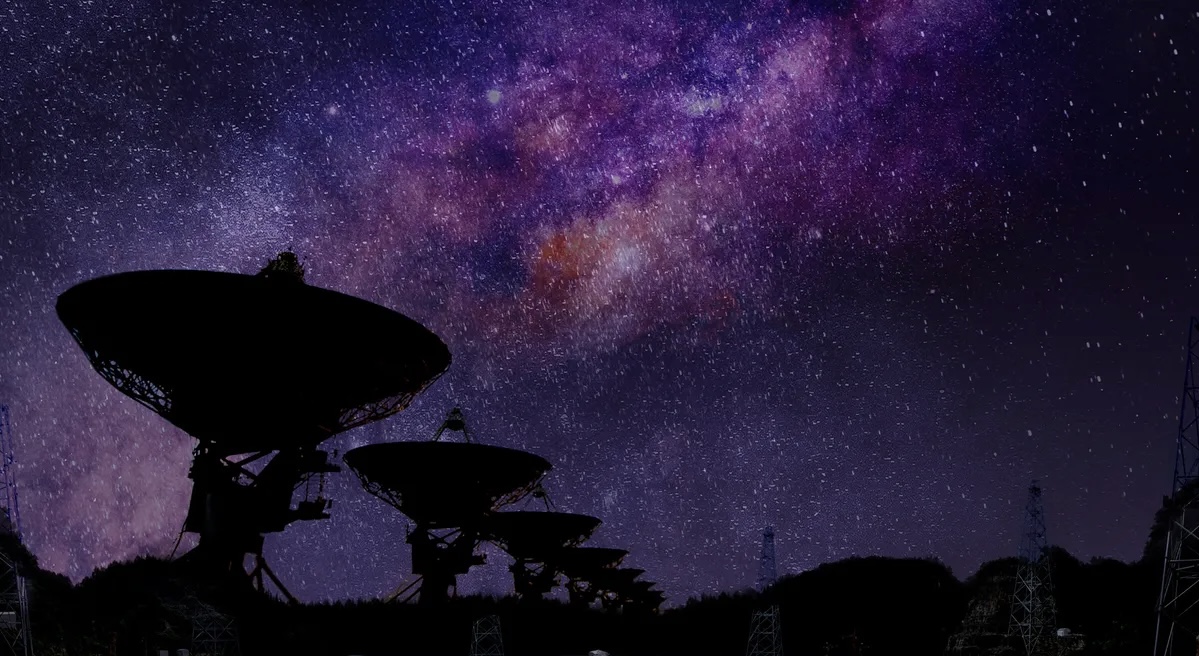
This course is intended to be a guided tour through the strange and occasionally messy world of radio astronomy. We will start from the basic physics of radio emission and propagation, then move step by step through the instruments and techniques that allow us to turn faint radio signals into actual science. We will cover how radio telescopes work, why a single dish behaves very differently from an interferometer, how spectral lines reveal the motion and composition of gas, and why pulsars are among the best clocks in the Universe. We will also explore the practical side of radio observing, including receivers, noise, calibration, imaging, data analysis, and the eternal struggle against radio-frequency interference — because the Universe is faint, but mobile phones are not.
The course will cover both classical and modern radio astronomy: single-dish observations, spectral-line astronomy, pulsars and pulsar timing, interferometry, high-frequency radio/sub-mm astronomy, VLBI. We will also cover fascinating modern topics such as the Event Horizon Telescope, transient searches, and SETI.
Along the way, we will encounter some of the field’s biggest scientific questions: how galaxies form stars, how black holes launch jets, how neutron stars behave, how we can image the shadow of a black hole, and whether anyone out there is broadcasting on purpose.The aim is to give a solid foundation without burying under unnecessary technical detail. By the end of the course, we should be able to read modern radio-astronomy papers, understand what the telescopes actually measure, and no longer feel that the telescope, the data, or the calibration pipeline are some kind of dark art practiced by a secret society of antenna wizards.
Ημερομηνία δημιουργίας
Δευτέρα 22 Ιουνίου 2026
-
Περίγραμμα
Instructors
Dr. John Antoniadis - Senior Researcher - FORTH Institute of Astrophysics
Dr. Carolina Cassadio - Associate Researcher - FORTH Institute of Astrophysics
Dr. Tanio Diaz Santos - Senior Researcher - FORTH Institute of AstrophysicsSyllabus
Week 1— Introduction: What is radio astronomy
Week 2 — Radiation mechanisms in the radio
Week 3 — Course: Propagation through plasmas and the interstellar medium
Week 4 — Antennas, beams, and single-dish observing
Week 5 — Receivers, backends, digitization, and RFI Lab: Fourier transforms, sampling etc.
Week 6 — Spectral-line radio astronomy
Week 7 — Polarization and magnetic fields
Week 8 — Pulsars and pulsar timing
Week 9 — Transients, FRBs, surveys, and time-domain radio astronomy
Week 10 — Interferometry I: the fundamental idea
Week 11 — Interferometry II: calibration and imaging
Week 12 — VLBI, astrometry, geodesy, and extreme angular resolution
Week 13 — High-frequency radio astronomy: ALMA, sub-mm astronomy, and the EHT
Week 14 — SETI, technosignatures, future facilities
Learning Outcomes
By the end of the semester, students should be able to:
- Explain the basic physics of radio emission and propagation.
- Understand how single-dish telescopes and interferometers work.
- Estimate sensitivity, angular resolution, beam size, brightness temperature, and survey speed
- Interpret continuum, spectral-line, polarization, pulsar, and VLBI data
- Understand the basic principles of SETI and technosignature searches
- Understand major modern facilities and experiments, including ALMA, ARGOS, EHT, LOFAR, MeerKAT, FAST, VLA/ngVLA, SKA pathfinders, and pulsar timing arrays.
- Design and write a simple radio observing proposal
- Perform basic radio data analysis using Python and modern analysis software (e.g. CASA, TEMPO2 etc.)
Bibliography
- Suggested bibliography:
Main:
- Essential Radio Astronomy, Condon & Ransom, Princeton University Press
https://science.nrao.edu/opportunities/courses/era
Other references:
- An introduction to Radio Astronomy, Burke Graham-Smith & Wilkinson
- Tools of Radio Astronomy, Wilson, Rohlfs & Hüttemeister, 2009, Springer
- Interferometry & Synthesis in Radio Astronomy, Thompson, Moran & Swenson
- Handbook of Pulsar Astronomy, Lorlmer & Kramer
Assessment Methods
Activity
Weight
Problem Sets
25%
Lab notebooks
35%
Observing proposal
35%
Participation
5%